

This guide covers the technique of creating artwork using oil pastels with a focus on tomatoes as the subject. Oil pastels are versatile and can produce vibrant colors and textures, making them ideal for still life compositions.
The process is straightforward and suitable for artists of all skill levels. You can experiment with blending and layering to achieve depth and realism in your tomato artwork.
Understanding Oil Pastels
Oil pastels are a unique medium that allows artists to create vibrant and textured artwork.
Their creamy consistency makes them easy to apply and blend, resulting in rich colors that stand out on paper.
This versatility makes oil pastels an excellent choice for still life compositions, especially when depicting subjects like ripe tomatoes.
Preparing Your Workspace
Before starting your artwork, ensure that your workspace is well-lit and organized.
Gather all necessary materials, including oil pastels in various colors, drawing paper, and blending tools.
Having everything at hand will make the process smoother and more enjoyable.
Sketching the Tomato Outline
Begin your artistic journey by lightly sketching the outline of the tomato with a pencil.
Focus on capturing the round shape and the distinctive stem.
This initial sketch serves as a guide for applying colors later on, so keep it light and simple.
Applying Base Colors
Once the outline is complete, it’s time to bring your tomato to life with color.
Start by filling in the body of the tomato with a vibrant red oil pastel.
Add green to the stem and consider using yellow or white for highlights to create depth and dimension.
Blending for Realism
Blending is a crucial step in achieving a realistic look.
Using your fingers or blending tools, gently smooth out the colors to create a glossy texture that mimics the shine of a ripe tomato.
This technique enhances the overall appearance, making the tomato appear more three-dimensional.
Adding Details and Final Touches
After blending, focus on adding details to your artwork.
Layer additional colors for shading, paying attention to where light hits the tomato and where shadows fall.
Once satisfied with your work, consider using a fixative spray to preserve your masterpiece, ensuring it remains vibrant for years to come.
Oil Pastel Tomato Art Tutorial
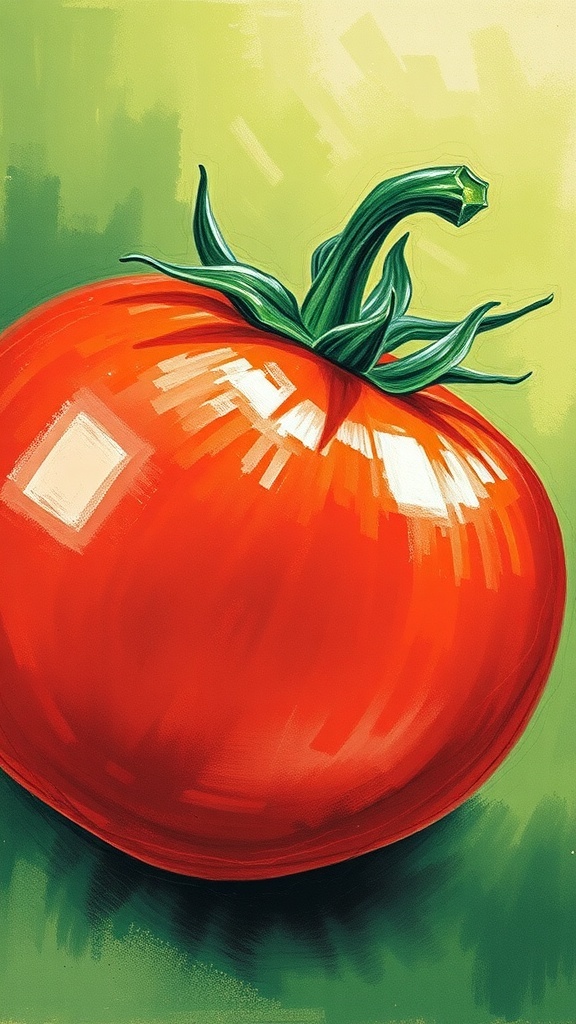
This tutorial will guide you through the steps of drawing a tomato using oil pastels. The process involves sketching the outline, applying base colors, and layering for shading and highlights. The final artwork showcases the rich reds and greens typical of ripe tomatoes.