

Achieving a perfect flaky pie crust is essential for any pie lover. A well-made crust provides a delicious base that complements the filling, whether it’s sweet or savory. Here are seven practical tips to help you create a flaky and tender pie crust every time.
These tips cover everything from ingredient selection to handling techniques, ensuring your pie crust turns out just right.
Creating the Perfect Pie Crust
Crafting a flaky pie crust is an art that every baking enthusiast should master.
The crust serves as the foundation for your pie, enhancing the overall experience with its texture and flavor.
To achieve that ideal balance, several key techniques can be employed.
Essential Ingredients for Success
The choice of ingredients plays a significant role in the outcome of your pie crust.
Using cold butter and water is crucial; this prevents the fat from melting before baking, allowing for those desirable flaky layers.
Moreover, opting for all-purpose flour strikes the right balance, avoiding excess protein that can lead to toughness.
Mixing Techniques Matter
How you combine your ingredients can make or break your crust.
It’s important to mix just until combined, as overworking the dough can develop gluten, resulting in a less tender crust.
This gentle approach ensures that your crust remains light and flaky.
The Importance of Chilling
Chilling the dough is a step that should not be overlooked.
Refrigerating the rolled-out dough for at least 30 minutes helps maintain its shape during baking.
This simple technique contributes to a crust that holds its form beautifully, preventing any unwanted shrinkage.
Incorporating Fats for Flakiness
Combining different types of fats can elevate your pie crust to new heights.
A mixture of butter and shortening brings together flavor and flakiness, creating a delightful texture.
Experimenting with ratios can lead to a crust that perfectly suits your taste.
Rolling Out the Dough
Even rolling is essential for uniform baking.
Using a rolling pin, aim for a consistent thickness throughout the dough.
This practice not only ensures even cooking but also helps prevent burning, resulting in a beautifully baked crust.
Blind Baking Techniques
For certain types of pies, blind baking is a necessary step.
Pre-baking the crust is particularly important for custard or cream pies, as it prevents a soggy bottom.
This technique guarantees that your pie crust remains crisp and delicious, no matter the filling.
Essential Tips for Flaky Pie Crust
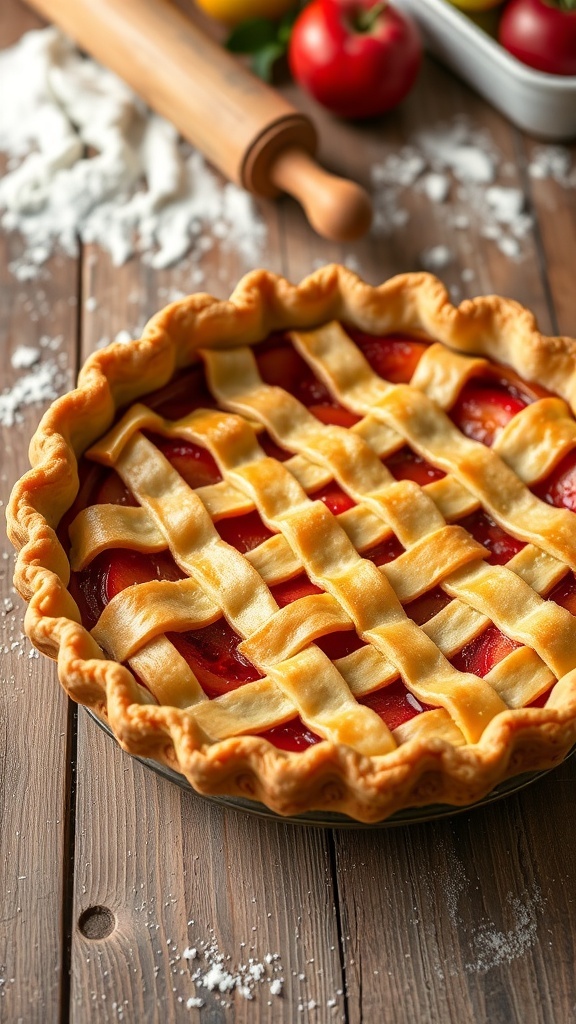
Follow these seven tips to master the art of pie crust making: use cold ingredients, avoid overworking the dough, chill the crust before baking, incorporate a mix of fats, use the right flour, roll out the dough evenly, and blind bake when necessary. Each tip contributes to the overall texture and flavor of your pie crust.