

Providing adequate support for tomato plants is essential for healthy growth and fruit production. Staking, caging, or using trellises can help keep the plants upright, allowing for better air circulation and sunlight exposure.
This guide outlines various methods to support your tomato plants effectively, ensuring they thrive and produce a bountiful harvest.
The Importance of Supporting Tomato Plants
Supporting tomato plants is a fundamental aspect of gardening that significantly impacts their health and productivity.
Without proper support, tomato plants can become sprawling and prone to diseases.
Staking, caging, or using trellises not only keeps the plants upright but also enhances air circulation and sunlight exposure, which are vital for growth.
When tomato plants are well-supported, they are less likely to suffer from issues such as fruit rot.
This is particularly important in humid conditions where moisture can linger on the fruit and foliage.
Proper support also simplifies the harvesting process, making it easier to access the ripe tomatoes.
Choosing the Right Support Method
There are several effective methods for supporting tomato plants, and the choice often depends on the variety of tomato and the available garden space.
Stakes are a popular choice for determinate varieties, while cages and trellises work well for indeterminate types that continue to grow throughout the season.
Wooden or metal stakes can be driven into the ground beside the plants, while tomato cages, made of wire or plastic, can be placed around the plants for support.
Trellises provide a more extensive support system, allowing plants to grow vertically, which can save space in smaller gardens.
Setting Up Your Support System
Installing the support system early in the growing season is crucial.
Setting up stakes, cages, or trellises at planting time or shortly after helps avoid disturbing the roots later on.
This proactive approach ensures that the plants can establish themselves without unnecessary stress.
When using stakes, it’s important to tie the main stem securely to the stake with twine or garden ties.
For cages, gently place the cage around the plant, ensuring it is stable.
With trellises, guide the stems through the structure as they grow to keep them supported.
Regular Maintenance for Healthy Growth
Maintaining your tomato plants is essential for optimal growth and fruit production.
Regular pruning helps improve airflow around the plants and allows them to focus their energy on producing fruit.
Removing suckers and excess foliage can lead to a more fruitful harvest.
Monitoring the support system is equally important.
Check the ties and supports regularly, adjusting them as necessary to ensure the plants remain upright and healthy.
This ongoing care will help prevent any potential issues and promote a bountiful harvest.
Creating a Thriving Garden Environment
A vibrant garden scene with healthy tomato plants is a sight to behold.
Surrounded by colorful flowers and basking in sunlight, these plants thrive in a well-tended environment.
The combination of lush green leaves and ripe red tomatoes not only enhances the garden’s aesthetic but also signifies a successful growing season.
Incorporating various support methods for your tomato plants can lead to a flourishing garden.
With the right care and attention, you can cultivate a space that not only produces delicious tomatoes but also brings joy and beauty to your outdoor area.
Conclusion: The Rewards of Proper Support
Investing time in supporting your tomato plants pays off in numerous ways.
From healthier plants to easier harvesting, the benefits are clear.
As you nurture your garden, remember that the right support system is key to achieving a thriving tomato crop.
Effective Tomato Plant Support Techniques
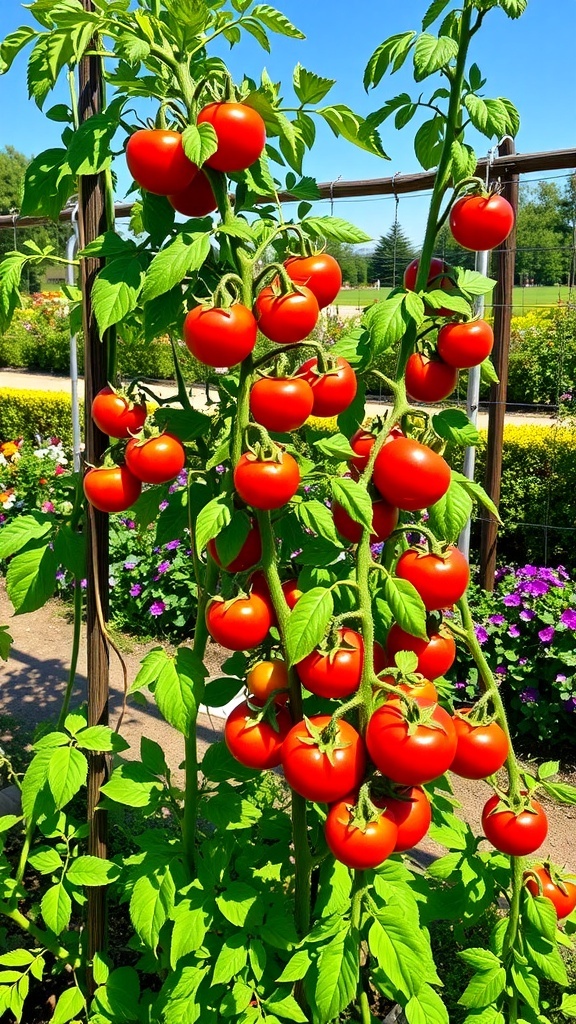
Using supports for tomato plants helps prevent diseases, reduces the risk of fruit rot, and makes harvesting easier. The right support method depends on the type of tomato and your garden setup.