

The tomato hornworm is a common pest that affects tomato plants and other members of the nightshade family. Recognizing and managing these pests is crucial for maintaining healthy crops.
These caterpillars can quickly defoliate plants, leading to reduced yields. Understanding their life cycle and effective control methods can help gardeners protect their tomato plants.
Understanding Tomato Hornworms
Tomato hornworms are notable pests that can wreak havoc on tomato plants and other nightshade family members.
These large green caterpillars can reach lengths of up to 4 inches, making them quite a sight on your plants.
They are the larvae of the five-spotted hawk moth and are easily recognized by their unique horn-like protrusion at the rear.
Feeding primarily on the leaves and stems of tomato plants, these caterpillars can cause significant damage if left unchecked.
Their voracious appetite can lead to defoliation, which ultimately affects the yield of your crops.
Identification of Tomato Hornworms
Identifying tomato hornworms is essential for effective management.
These caterpillars exhibit a bright green color, often adorned with white stripes along their sides, which helps them blend into the foliage.
Measuring up to 4 inches in length, their size makes them relatively easy to spot, especially when they are actively feeding.
The most distinctive feature is the horn-like structure on their rear, which sets them apart from other caterpillars.
Control Methods for Tomato Hornworms
Managing tomato hornworms involves a few effective strategies.
One of the simplest methods is handpicking; regularly inspecting your plants allows you to remove these pests directly.
Encouraging natural predators, such as birds and beneficial insects, can also help control hornworm populations.
These creatures feed on hornworms and can significantly reduce their numbers in your garden.
Using Insecticidal Soap
If handpicking and natural predators are insufficient, consider using insecticidal soap or neem oil.
These options deter hornworms while being safe for beneficial insects, making them a great choice for organic gardening.
Applying these treatments can help protect your plants from further damage and promote healthier growth.
Regular monitoring and proactive measures will keep your tomato plants thriving.
Creating a Healthy Environment
Maintaining a healthy environment for your tomato plants can also minimize hornworm issues.
Healthy plants are more resilient and can better withstand pest pressures.
Ensure your plants receive adequate water and nutrients, and practice crop rotation to disrupt pest life cycles.
A well-cared-for garden is less likely to attract pests like the tomato hornworm.
Conclusion
By understanding tomato hornworms and implementing effective control methods, gardeners can protect their crops.
Regular monitoring, handpicking, and encouraging natural predators are key strategies for managing these pests.
With diligence and care, you can enjoy a bountiful harvest of tomatoes while keeping hornworms at bay.
Understanding Tomato Hornworms
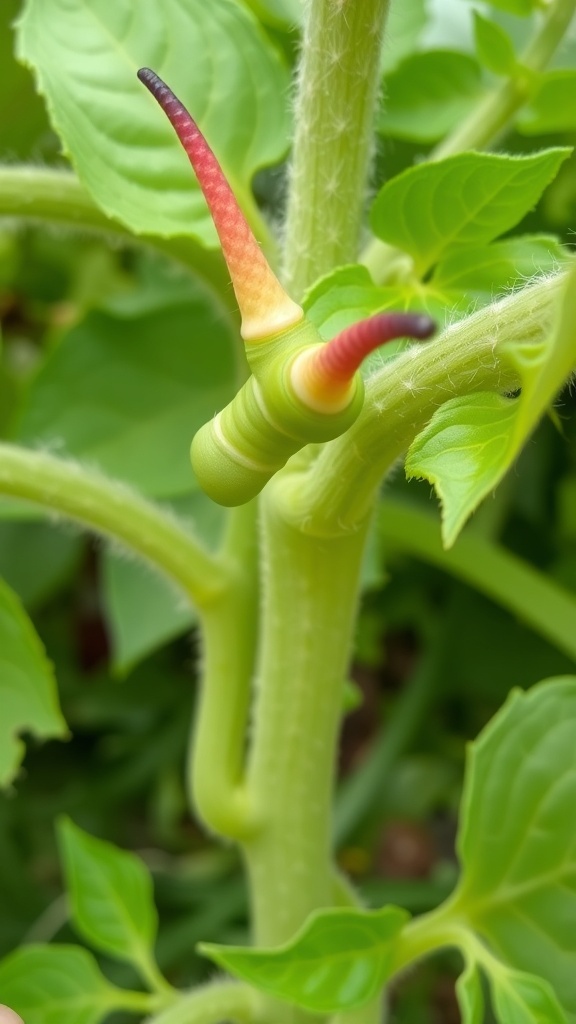
Tomato hornworms are large green caterpillars that can grow up to 4 inches long. They are the larvae of the five-spotted hawk moth and are known for their distinctive horn-like protrusion on their rear end. They primarily feed on the leaves and stems of tomato plants, which can lead to significant damage if not controlled.