

Crust geology refers to the study of the Earth’s outermost layer, known as the crust. This layer is composed of various types of rocks and minerals, and it plays a crucial role in the overall structure and dynamics of our planet.
The Earth’s crust is divided into two main types: continental crust, which forms the continents, and oceanic crust, which underlies the ocean basins. Understanding the composition and processes of crust geology is essential for fields such as geology, environmental science, and natural resource management.
Understanding Crust Geology
Crust geology focuses on the Earth’s outermost layer, known as the crust. This layer is made up of various rock types and minerals, playing a significant role in the planet’s structure and dynamics.
The crust is divided into two primary types: continental crust, which forms the landmasses, and oceanic crust, which lies beneath the oceans. Grasping the composition and processes of crust geology is vital for disciplines like geology, environmental science, and natural resource management.
Key Aspects of Crust Geology
The Earth’s crust is relatively thin compared to the mantle and core, averaging about 30 kilometers in thickness beneath continents and 5-10 kilometers beneath oceans. It consists mainly of igneous, sedimentary, and metamorphic rocks, each formed through distinct geological processes.
Continental crust is predominantly composed of granitic rocks, while oceanic crust is primarily basaltic. This difference in composition is crucial for understanding the geological features and processes associated with each type of crust.
Tectonic Activities and Their Impact
The crust is actively involved in tectonic processes, which include earthquakes and volcanic eruptions. These phenomena are a direct result of the movements of tectonic plates that make up the crust.
Understanding these activities helps in predicting geological events and assessing risks associated with them. The interaction of tectonic plates can lead to the formation of mountains, oceanic ridges, and other significant geological features.
Mineral Resources in the Crust
The crust is a rich source of mineral resources, including metals, fossil fuels, and groundwater. These resources are essential for various industries and play a crucial role in human development.
Exploring the crust for these resources requires a solid understanding of its geological composition and structure. Sustainable management of these resources is vital for environmental conservation and economic stability.
Visualizing the Earth’s Layers
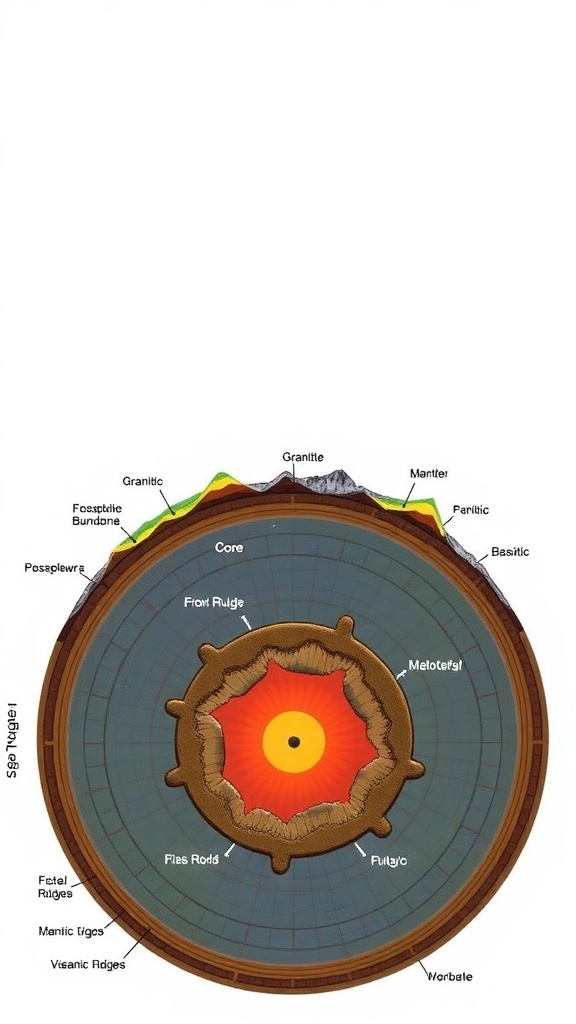
A geological cross-section provides a clear illustration of the Earth’s structure, showcasing the crust, mantle, and core. This visual representation highlights various rock types, including granitic and basaltic formations.
Labels indicating tectonic plate boundaries and features such as mountains and oceanic ridges enhance the understanding of geological processes and formations. Such diagrams are invaluable educational tools for both students and professionals in the field.
Conclusion: The Importance of Crust Geology
Understanding the geology of the Earth’s crust is fundamental for various scientific fields. It informs us about the planet’s history, the processes shaping its surface, and the resources it provides.
By studying the crust, we gain insights into the dynamic nature of our planet and the intricate relationships between its layers. This knowledge is crucial for addressing environmental challenges and managing natural resources effectively.
Key Aspects of Crust Geology
The Earth’s crust is relatively thin compared to the underlying mantle and core, with an average thickness of about 30 kilometers beneath continents and about 5-10 kilometers beneath oceans. It is primarily composed of igneous, sedimentary, and metamorphic rocks, each formed through different geological processes.