

The Earth’s structure is divided into several layers, with the crust and mantle being the two outermost layers. The crust is the thin, solid outer layer where we live, while the mantle lies beneath it and is composed of semi-solid rock that flows slowly over geological time.
Understanding the properties and dynamics of the crust and mantle is essential for studying geological processes such as plate tectonics, volcanic activity, and the formation of mountains.
Overview of Earth’s Crust and Mantle
The Earth is composed of several distinct layers, with the crust and mantle being the most significant for our understanding of geological processes. The crust serves as the thin, solid outer layer where all terrestrial life exists. It varies in thickness, averaging around 30 kilometers beneath continents and only about 5 to 10 kilometers beneath oceans.
Below the crust lies the mantle, a semi-solid layer that extends to depths of approximately 2,900 kilometers. This layer is primarily made up of silicate minerals, which include olivine and pyroxene, rich in iron and magnesium. The differences in composition between the crust and mantle play a crucial role in the dynamics of the Earth’s geology.
Characteristics of the Crust
The crust is categorized into two types: continental and oceanic. The continental crust is primarily composed of granite, while the oceanic crust is mainly basalt. This distinction is important as it influences the geological features and processes that occur in different regions of the Earth.
Thickness variations in the crust can lead to significant geological phenomena. For example, mountain ranges are often formed where continental crust is thickened due to tectonic forces, while oceanic crust is generally thinner and denser, leading to different behaviors in tectonic plate interactions.
Understanding the Mantle
The mantle is a fascinating layer characterized by its semi-solid state, allowing for slow movement over geological time. This movement is crucial for the process of convection, which drives plate tectonics and contributes to volcanic activity.
As the mantle flows, it creates pressure and heat, which can lead to the melting of rocks and the formation of magma. This process is essential for understanding volcanic eruptions and the creation of new crust as magma rises to the surface.
Color Representation in Geological Illustrations
In geological illustrations, color plays a significant role in distinguishing between different layers of the Earth. The crust is often depicted in lighter shades, symbolizing its solid and relatively cooler nature. In contrast, the mantle is represented in darker tones, highlighting its semi-solid composition and the intense heat found within.
This color differentiation not only aids in visual understanding but also emphasizes the transition between the crust and mantle, a critical aspect of Earth’s structure that influences various geological processes.
Importance of Studying the Crust and Mantle
Understanding the crust and mantle is vital for geologists and earth scientists. These layers are fundamental to studying plate tectonics, which explains the movement of the Earth’s plates and the resulting geological activity.
Moreover, knowledge of the crust and mantle helps in predicting volcanic eruptions and understanding the formation of mountain ranges. By studying these layers, scientists can gain insights into the history of the Earth and its ongoing geological evolution.
Conclusion: The Interconnectedness of Earth’s Layers
The crust and mantle are integral components of the Earth’s structure, each playing a unique role in the planet’s geology. Their characteristics, composition, and interactions are essential for understanding the dynamic processes that shape our world.
Through continued research and exploration, we can deepen our knowledge of these layers, leading to advancements in geology and a better understanding of the Earth’s past, present, and future.
Overview of Earth’s Crust and Mantle
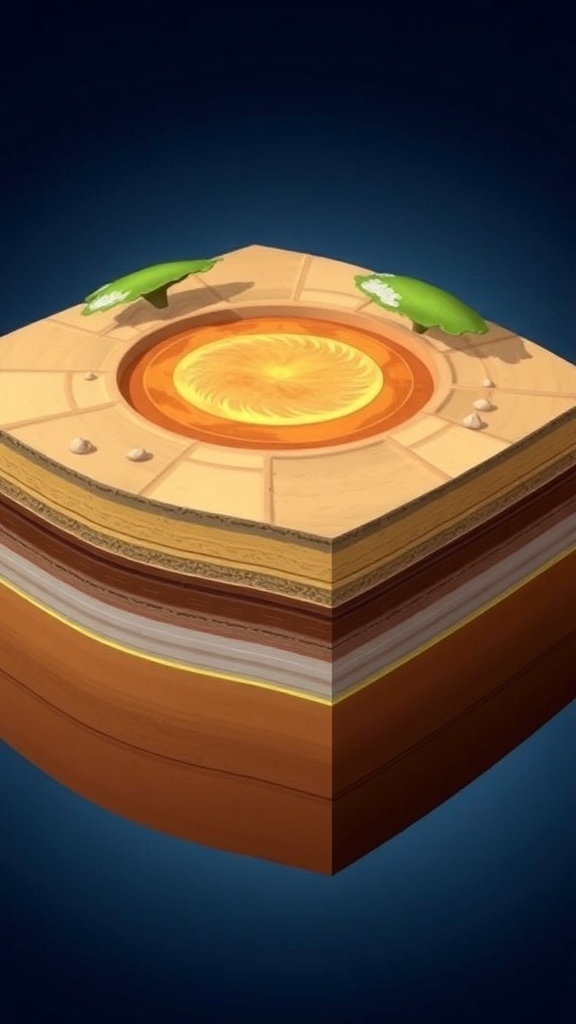
The crust varies in thickness, averaging about 30 kilometers (18.6 miles) beneath continents and about 5-10 kilometers (3-6 miles) beneath oceans. The mantle extends to a depth of about 2,900 kilometers (1,800 miles) and is made up of silicate minerals rich in iron and magnesium.